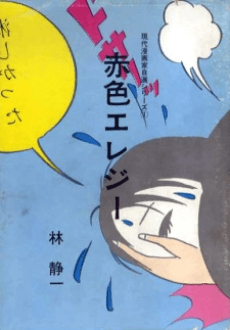
Akairo Elegy
Seiichi Hayashi produced Red Colored Elegy between 1970 and 1971, in the aftermath of a politically turbulent and culturally vibrant decade that promised but failed to deliver new possibilities. With a combination of sparse line work and visual codes borrowed from animation and film, the quiet melancholy lives of a young couple struggling to make ends meet are beautifully captured in this poetic masterpiece. Uninvolved with the political movements of the time, Ichiro and Sachiko hope for something better, but they're no revolutionaries; their spare time is spent drinking, smoking, daydreaming, and sleeping--together and at times with others. While Ichiro attempts to make a living from his comics, Sachiko's parents are eager to arrange a marriage for her, but Ichiro doesn't seem interested. Both in their relationship and at work, Ichiro and Sachiko are unable to say the things they need to say, and like any couple, at times say things to each other that they do not mean, ultimately communicating as much with their body language and what remains unsaid as with words. Red Colored Elegy is informed as much by underground Japanese comics of the time as it is by the French Nouvelle Vague, and its cultural referents range from James Dean to Ken Takakura. Its influence in Japan was so large that Morio Agata, a prominent Japanese folk musician and singer songwriter, debuted with a love song written and named after it. "I wanted to live like Sachiko and Ichiro; to have aspirations even while living stoically and humbly." --Morio Agata (Source: Drawn and Quaterly)
Affiliate links — purchases support YOFUKA at no extra cost to you.
Coverage
YOFUKA has tracked Akairo Elegy across 1 story from 1 distinct source, with the most recent dispatch landing 6 days ago. Recent reporting includes “Sunny Day Service to Release Ajisai on 7-Inch Vinyl With Keiichi Sokabe’s Red Elegy Artwork Arrangement”.